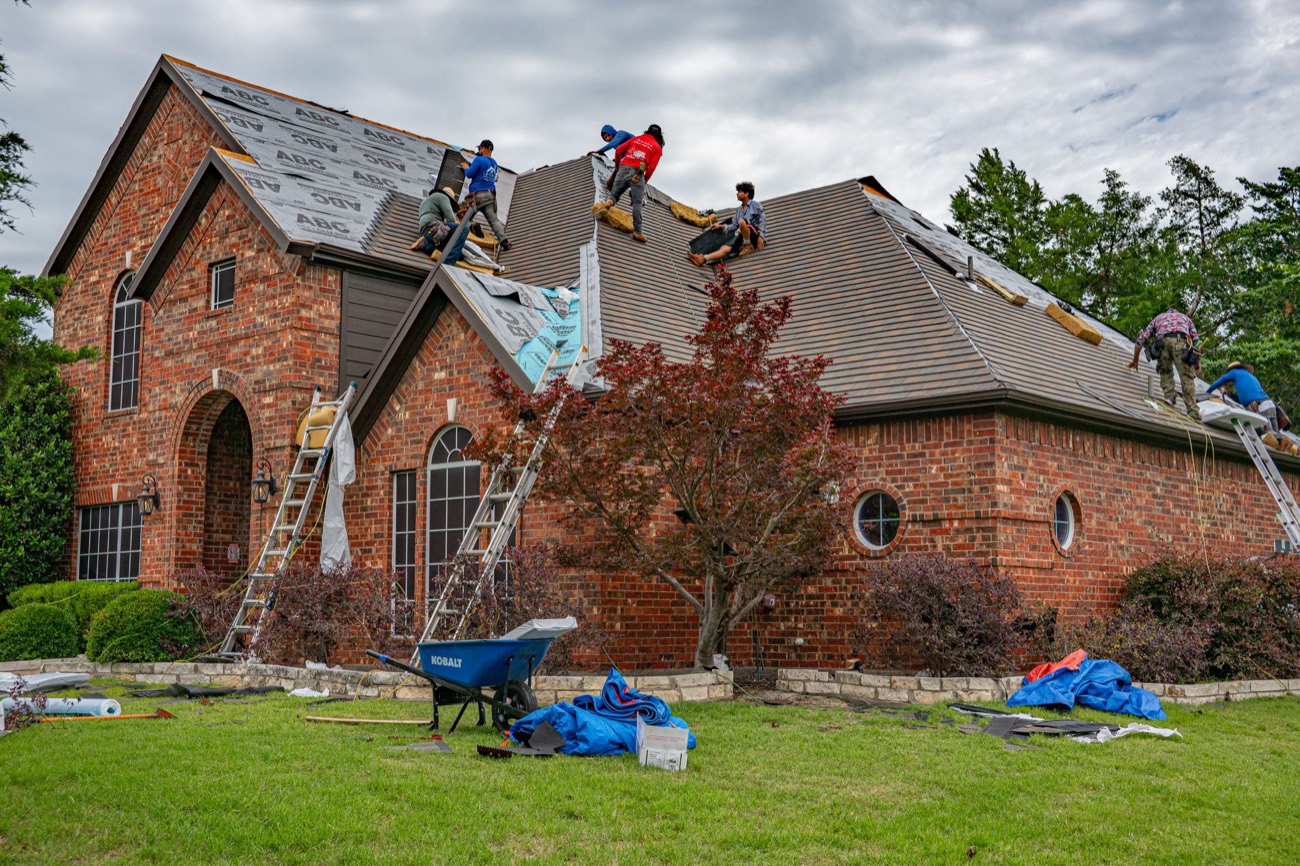
Most homeowners pay between $7,500 and $14,000 to replace a roof in 2026, with a national average around $10,000, according to Fixr. That works out to roughly $4.75 per square foot on average, ranging from about $3.75 to $11 depending on material and complexity. Asphalt shingles sit at the low end; metal, tile, and slate run far higher. What you actually pay depends on your roof’s size, pitch, and material, plus local labor rates — and whether insurance covers any of it. These are national ranges as of 2026, not a quote for your home, so get several written estimates and verify current pricing with local contractors before you budget.
What drives the price of a new roof
Two roofs of the same size can cost thousands of dollars apart. The biggest factors:
- Material. This is the single largest swing. Asphalt shingles are the cheapest common option; slate and copper can cost five or six times as much per square foot.
- Roof size. Roofers price by the “square” (100 square feet). More area means more material and more labor.
- Labor. Labor is a huge share of the bill — Fixr puts it at 40% to 60% of the total, and This Old House notes it can run around 60% of project cost. Steep, complex roofs cost more to work on.
- Pitch and complexity. Steep slopes, multiple valleys, dormers, skylights, and chimneys all add labor time.
- Tear-off and repairs. Removing old layers and fixing rotted decking underneath add cost that a simple quote may not show.
- Location. Regional labor and permit costs vary widely across the US.
Because these factors compound, the ranges below are starting points. Your roof could land above or below them.
Roof replacement cost by material
Material choice sets the floor and ceiling for your budget. The table below shows installed cost ranges for a roughly 1,700-square-foot roof, per Fixr’s 2026 data:
| Material | Installed cost (approx. 1,700 sq ft) |
|---|---|
| Asphalt shingles | $6,000 – $10,000 |
| Architectural shingles | $8,000 – $32,000 |
| Cedar shake | $10,000 – $30,000 |
| Concrete tile | $14,000 – $24,000 |
| Clay tile | $14,000 – $28,000 |
| Metal | $14,000 – $38,000 |
| Slate | $20,000 – $60,000 |
| Copper | $30,000 – $60,000 |
Source: Fixr, 2026. Ranges are national estimates and vary by region, roof complexity, and contractor. Verify current quotes locally.
The cheaper material isn’t always cheaper over time. Asphalt shingles typically last 15 to 25 years, while metal, tile, and slate can last several decades or longer — so a pricier roof today may mean fewer replacements over the life of the home. Weigh up-front cost against lifespan for your situation.
Roof replacement cost by size
Size scales the bill through both material and labor. These installed totals for asphalt shingles come from This Old House’s 2026 figures:
| Roof size | Installed cost (asphalt shingles) |
|---|---|
| 1,000 sq ft | $4,291 – $5,994 |
| 1,500 sq ft | $6,355 – $8,804 |
| 2,000 sq ft | $8,419 – $11,665 |
| 3,000 sq ft | $12,547 – $17,385 |
Source: This Old House, 2026. For a 2,000-square-foot home, the same source puts a full shingle job at roughly $6,885 to $23,993, or about $3.44 to $12 per square foot, once material grade and complexity are factored in.
Note that a home’s floor area and its roof area aren’t the same number — a steep or complex roof has more surface than the footprint below it. Have a contractor measure the actual roof before you rely on any size-based estimate.
Will insurance cover a roof replacement?
This is the question that changes everything about your out-of-pocket cost — and the answer is often “it depends.” Home insurance is designed to pay for sudden, accidental damage, not for age or upkeep.
What’s typically covered. If a covered peril damages your roof, insurance may pay to repair or replace it, up to your policy limit and minus your deductible. Progressive lists wind and storms, hail, fire, and falling objects (like trees) as commonly covered causes.
What’s excluded. Insurers generally won’t pay for a roof that simply wore out. Progressive is explicit that damage from materials wearing down over time, neglect, and failing to maintain the roof isn’t covered — and that “if your roof is older, your policy may provide limited coverage or none.” Some policies in storm-prone regions also carry a wind and hail exclusion or a cosmetic damage exclusion, which limits or removes coverage for those causes. Read your declarations page to see what applies to you.
Age matters even when damage is covered. Older roofs are frequently paid on an actual cash value basis rather than replacement cost — meaning depreciation for age is subtracted from your payout.
ACV vs. RCV: why the payout can be far less than the price tag
How your policy values the roof decides how big your check is:
- Replacement cost value (RCV) pays to replace the roof with new materials of like kind and quality, without deducting for age.
- Actual cash value (ACV) pays replacement cost minus depreciation — so a 15- or 20-year-old roof yields a much smaller check, even for the same covered damage.
Many insurers automatically switch older roofs to ACV, so a roof near the end of its lifespan can leave you covering a large share of a $10,000-plus replacement yourself. Confirm which basis applies to your roof before you file, not after. For the full mechanics, see our guides on actual cash value vs. replacement cost and whether insurance covers an old roof.
Should you file a claim or pay out of pocket?
Not every roof problem belongs in a claim. Filing for damage that won’t be covered — or for a repair barely above your deductible — can raise your premium more than you recover. A rough decision path:
- Identify the cause. Sudden covered event (hail, wind, fire, fallen tree) vs. gradual wear. Only the former is claimable. See our roof damage insurance claims guide for how to tell the difference.
- Document everything. Photos, dates, and a written contractor estimate before you touch anything.
- Compare to your deductible. If the covered repair cost only slightly exceeds your deductible, paying out of pocket may be cheaper overall.
- Check your valuation basis. An ACV payout on an old roof may cover far less than you expect.
- File promptly if it’s worth it. Storm-related claims often have deadlines. Our how to file a home insurance claim walkthrough covers the steps. For hail specifically, see hail damage roof insurance claims.
The bottom line
Budget for a roof replacement in the $7,500 to $14,000 range for a standard asphalt-shingle job in 2026, and expect materials like metal, tile, or slate to push the total well past $20,000. Insurance may cover part of the cost, but only for sudden covered damage — and if your roof is older, an actual cash value settlement can leave a large gap between the payout and the real price of a new roof. Before you commit, get at least three written estimates from licensed local contractors, read your policy’s roof terms, and confirm whether you’re on RCV or ACV. The national numbers here are a planning guide as of 2026, not a quote for your home — verify current pricing locally.
This article is general education, not financial or legal advice. Costs and coverage vary by region, material, and policy; confirm current quotes and your specific coverage with licensed contractors and your insurer.